Sustain and Decay
  • Blog
  • About
  • Contact

You Only have 10 years!?

9/23/2017

0 Comments

 
Picture
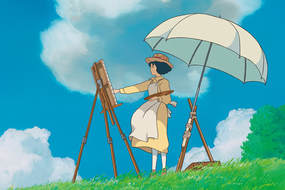
In the film “The Wind Rises,” there was a concept presented that an artist, craftsman, or innovator only has about 10 years in which to really create something unique before others eclipse the quality of their creation.  Really, it was a statement more about innovation, but it struck me as relating to quality also.  When I first contemplated this idea, I certainly did not like it.  Surely authors, painters, and filmmakers are often, if not usually, at a creative peak for longer than 10 years.  But, when I started thinking of this idea as applied to music artist, it was hard for me to find any musician who really had much more than 10 years in which they were at their peak of the production of brilliant creations.  As much as I love the films of Miyazaki, I hated that he and his people put this “10 year” idea in my head.  It began to worm its way into my perceptions, and I did not like it.

What is brilliant in musical art?  Really, music is one of the most individual, and dare I say, subjective art forms.  Everyone has a different ear that is influenced by biology, cultural background, and experience.  That said, some opinions are shared among a certain amount of people.
One could say David Bowie maybe had about 12 years, from 1971 to 1983, but many would argue that he continued to produce good work after that.  I would say that even though he still had some good material, such “good” material was never close to quantity as in the above mentioned time frame.  Though, at this time I feel like “Black Star” is just as good as much of his material from the 70s.  Genesis maybe had more than 10 years, from “Nursery Cryme” to “Invisible Touch,” but this could be disputed, and it is not much more than 10 years.  And some musical acts like Duran Duran, I would argue, only had about 5 years, from 1981 to 1986, though “All you Need is Now” from 2011 is an outlier or comeback of sorts.
That said, there is an artist who I believe breaks down this ridged concept of “10 years,” at worst putting cracks in it, and at best blowing it into small rocky bits.  This musical artist is from Japan; Her name is Taeko Onuki.

Picture
I have to admit that when I first heard her material, about 8 years ago, I did not care for it much.  I thought maybe she sounded like a little boy, and the songs did not stand out to me.  But, like much of the greatest music, it takes several listens to “get.”  Eventually, she became one of my favorite artist, making her way, at least, into my top 10.
I do not know much about her other than what she has produced, but I believe she got started as a member of the “New Music” rock group Sugarbabe in 1975.  They had one album that is good, and was popular in Japan at the time.  She would part with Sugarbabe and start a solo career in 76.  Her first 3 albums continue with the smooth, high fidelity, 70s pop, funk-fusion New Music sound that was ubiquitous in Japan in the late 70s.  The 3rd album, “Mignonne” would start a run of amazing records with incredible melodic pop songwriting, but it was by no means similar in style to what she would do in the 80s.  That said, she was a good songwriter before, but by 1978 she had become one of the best I have ever heard.  I would say she is up there with Burt Bacharach (Like him or not, you have to respect his genius, and admit he had a run far longer than 10 years).
Picture
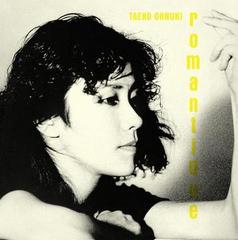
By 1980, Onuki San seems to have shifted her style.  Everyone, or many, in Japan was adopting a Yellow Magic Orchestra influenced “Technopop” style, and while Onuki San incorporated some of this into her music, melodically she seems to have pulled influence from European Romantic composers like Schubert.  During this period, her heart seems to have been attached to a romanticized version of France, and out of this came intricate melodies that were also catchy.  She would continue on this run of greatness from “Romantique” in 1980 through “Copine” in 1985.  Her 1984 record, “Kaie,” while being in the vein I have described, also plays much like a movie soundtrack not unlike those from Studio Ghibli.
Picture
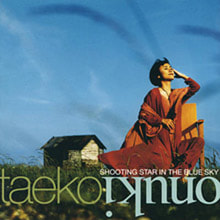
Although Onuki San would start to experiment with children’s music in the mid 80s, along with African inspired compositions (more romanticized than literal), her styles in the late 80s would start to fan out into many different genres from Sophisti-Pop to Bossa Nova to straight JPop.  Her quality of songwriting would not diminish, save for maybe one album in 1992.  But in 1993 she made “Shooting Star in the Blue Sky” in which she continued at the highest of quality despite a perceived lull in quality of pop music at that time.  On that record, she wrote mostly in a general pop style, but did successfully experiment with latin and folk styles also.  In 1995 she would release “TCHAU,” which was partially recorded in Rio Brazil, and successfully combined traditional Brazilian sounds with traditional Japanese sounds.  This is no small feat considering she also continued to pin great songs.

Picture
The quality of Taeko Onuki’s music would not diminish through 2002.  Really, I would say that she had 20 to 25 years of brilliance as a musical artist.  So, there was no 10 year limit for her, and we should all drop the idea of only 10 years for anyone.  Who are we to put up such a strict and ungenerous wall for artists?  Who are we to judge their creativity, which even at its worst is much better than most of us could hope to achieve?  Pish-Posh to you "10 year rule."

0 Comments

Freedom and Art

7/22/2017

0 Comments

 
Picture
The concept of “freedom” is not talked about much in relation to musical art.  It is a concept that is hard to define, but when it is experienced despite a lack of vocabulary to define it, it is still known.  The word “freedom” is thrown around  a lot in the United States when it comes to how people perceive our social, economic, and governmental structure.  Given the realities of society, money, capitalism, and republic, real “freedom” is not created by or even nurtured by these things.  Money, and our need for it, can be a great hindrance to freedom (as many economically poor people know too well).  If we are lucky, we are bound to obligations to create income for ourselves, hopefully lawfully, and if we are unlucky we find little to no opportunity for adequate income for basic necessity.  Either choice is bad or worse for most people, and either choice most often stifles any “freedom” one might know.  People need food, clothing, shelter, and usually healthcare to live.  The necessity and reliance on such things, given a limited and feeble human body, actually forces many of us into some level of servitude rather than “freedom.”  Materialism is encouraged in the United States, not by everyone, but by those groups of people called “companies” or “organizations” who desire to acquire money from those they call “consumers” or “clients.”  Many objects in life can be good and some objects and bring some happiness to an individual or group, but acquisition of objects for the sake of acquiring them often creates the opposite of freedom in our lives.  “Freedom” is not necessarily experienced due to isolation or separation from other people or society.  A healthy “freedom,” depending on how you define it, is not separation from people.  But, our dependency on income can quell a sense of “freedom” and cause conflict with others.
All of this said, my intention is not to speak of political or economic things.  I do not intend to dwell on the brokenness of any humanly created social system.  Instead, I intend to share an experience of “freedom” or a realization of “freedom” can occur through music.  

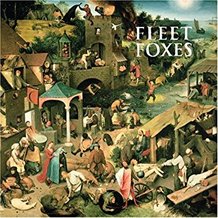
When I first heard the debut self-titled Fleet Foxes album, back in 2008, about when it was released, I could tell it was an instant classic.  It is rare when an album strikes one as a classic even when it is completely new.  Normally, it takes many years of time for one to be able to look back and label an album as “classic.”  But, just as with the first time I heard OK, Computer in 1997, I knew Self-Title, and the companion EP Sun Giant, by Fleet Foxes was a timeless work of art.
Picture
It is a musical journey through the woods, by streams of bubbling water, and into the soul.  Some might say it could have come off as pretentious, but Fleet Foxes pull it off because it is such a beautiful and perfect composition.  When I listen to Self-Title I smell and see Cades Cove, I feel the cool air of the Smoky Mountain woods, I sense the timelessness of being alive and a “freedom” from the oppressive systems forced upon our lives from necessity.  Sometimes the album feels like a fairy tale world conveyed through sound, and other times it feels like open meadows in the valley of the Tennessee mountains.  In and through this music I feel a “freedom,” and I know this “freedom” is good.  I might be stuck in an office, mindlessly pushing digital information to make money for an organization, by my heart sings to me and says, “you are alive, and the true nature of life is much more than the daily bondage you experience.”  This is spiritual music. 

This is also very melodic and carefully crafted music.  Every melody is original and classic at the same time.  The pop hooks are prevalent, yet at the same time Fleet Foxes sound more like the progressive rock days of Genesis than almost any other band.  This is not despite Fleet Foxes incorporation of vocal harmony and folk music stylings.  Genesis too did have some British folk influences in their compositions from the early 70s.  Fleet Foxes, like some progressive rock, does not always follow a basic and usual pop song format.  Instead, they find ways of cleverly putting together different “movements” and parts to form their songs in mostly unconventional ways.  Their music is beautiful, catchy, powerful, wistful, organic, earthy, and spiritual.  There are moments of sadness that feel one’s heart with longing, there are moments that give one goosebumps, and there are moments of transcendence.

Picture
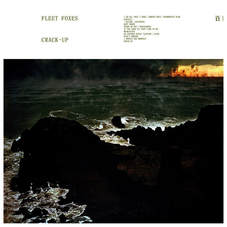
I have to confess that I was greatly disappointed with the second Fleet Foxes album Helpless Blues.  Sorry if you like the album, but to me it seemed whiney and uninspired with little direction and weak songs.  Maybe I just do not get that one yet.  But, the new Fleet Foxes album, Crack-Up, which is their 3rd album, too me, finally feels like a proper follow up to the first album.  Crack-Up is lush and full of magic, like the first album.  But, unlike the first album we get a sense not of mountains, fields, forest, but instead seascapes, the vast ocean, the endless sky, and the waves breaking against the rocks on the shore.  Though it might not be quite as melodically strong as Self-Title, it is musically more ambitious.  It is thoughtful, challenging, beautiful, and again spiritual.  It brushes up against progressive rock a little more than their previous material, but it also sounds more in sync with our time.  The is art, and it has been carefully crafted.  Each part has been meticulously and intentionally created purposely.  Lyrically, it is also more mature than their previous work.  Fleet Foxes have gone back to writing poetry (Helpless Blues , the second album, having been an interlude to poetic allusion), but the poetry of Crack-Up seems more meaningful than that of their first album.  The album holds together like one piece of music, and throughout it coveys the human spiritual journey, like a voyage across oceans, as a search meaning and the shrouded shores of who and what we were made to be.  In some ways Crack-Up is more serious, and feels a little darker than previous material, but then Fleet Foxes have always been able to pull off serious music that conveys a sense of longing.

Maybe it could be said that with Crack-Up Fleet Foxes are searching for “freedom.”  Instead of the music providing the fleeting feeling of freedom, it communicates the feeling of the contemplation of possible “freedom.”  Through this record, we can experience with them the human experience of waiting and searching for one who gives peace, meaning, and freedom that the world, as it is, cannot give.  We are all waiting for Him, in the already but not-yet age, turning our boat in His direction in a sea of what seems like chaos and meaninglessness.  We are looking through the fog hoping to see the light of His beacon.  Though it is often us who attempt to force Him to show up when and how we want, instead of allowing Him to come to us as He chooses.  As the lyric from Crack-Up says, “the tighter the fist, the looser the sale, so don’t resist.”  The wind blows where it wants and it can be trusted.  The yolk is light and the burden easy, so cease striving and know that He is with you.

There is a story of a man who was unjustly put to death, but He being not just a man but also God defeated Death and achieved complete freedom from bondage of the brokenness of our dark world.  And this man said that because He rose from the dead, we will also rise to be like Him and with Him.

0 Comments

It's Good to Hear You Again

4/15/2017

0 Comments

 
Picture
Back in 2005, I had just graduated from college, and it was in a difficult time in life.  I had an apartment, was living by myself, and a crap job that, at least, paid the bills… just.  So I was listening to The Innocence Mission a lot back in those days.  (If you have not heard The Innocence Mission, please check them out.)  Though I had some great friends, and looking back a lot of good memories of that time, at the time there was also a lot of difficulty.  The music of The Innocence Mission seemed soothing and spiritually helpful.

And what else was going on back in 2005 you might ask?  A social network called Myspace.  (it sure came and went pretty fast.)  So while doing social networking sort of stuff I happened to discover an artist that was recommended as similar to The Innocence Mission.  This artist, at the time was only going by the her first name, Gileah, but is more commonly known as Gileah Taylor.  She had just released an album called The Golden Plains, and after listening to the 3 or 4 songs found on her Myspace site, I promptly ordered the CD.
Picture
The Golden Plains hit me in a perfect way at the right time of my life.  Kind of folk, but not really like the Innocence Mission, kind of singer-songwriter, well written (to the ears of someone in their 20s for sure), and well produced. Its beauty and emotion was, and is, highly effective.  I must have worn the CD out playing it so much.  (I still have it on rotation on my DAP).  Really, the album has perfectly balanced production with a lot of space between the instruments and simple arrangements.  The effect was much like Riot On An Empty Street by Kings of Convenience.  The songs have space to breath, and every part sounds perfectly placed, no matter how simple, making every instrument stand out and shine individually.  Though The Golden Plains is a lovely album, Gileah seemed to remain mostly unknown in the music world, which felt a little frustrating.

Almost 10 years after I discovered Gileah Taylor, in the fall of 2016 I happened to be passing through Seaside in Florida visiting family, and I stopped by their local independent record store (as is my custom).  (Ms. Taylor lives in the Desten area of Florida).  Because she is a local artist, this record store actually stocks copies of her albums.  While at the record store, I discovered that Ms. Taylor had recorded a new album, just released a few months earlier.  I decided I could not pass up the opportunity to hear what she was up to these days, so I bought a copy of her new album Songs for Late at Night vol. 2.

Before I talk a little more about this album, I want to say that the main strength of Ms. Gileah Taylor is her incredible voice.  It is one of a kind, and one of the best I have heard.  Like Harry Nilsson, her voice is like this amazing unique instrument of beauty.  It is such a joy to hear her sing, and you get the feeling like you are witnessing a rare beauty that only exist once and for a short time.  If a voice is an instrument, there is only one in the world like it, and it only exist for the lifespan of the person who possess it.  It is truly a treasure, more than at stradivarius, as at least there are several of those and they last for hundreds of years.  There is only one Gileah Taylor, and it is an amazing joy to hear her sing.  I would say she is as good, if not better, than Norah Jones.  Norah is great, but Gileah is wonderful too, and I wish she was more well known as an artist.  There are certain artist, people like Feist or Regina Spektor, and they are good, but I believe Gileah Taylor is just as good or maybe better than any of them.  I cannot say why some people end up being more popular than others, except for maybe they just happen to be in the right place at the right time.  Or maybe they meet the right people.  I have known artist in Nashville who are as good as any indie-pop sensation, but who are also almost completely unknown.


Picture
For Songs for Late at Night vol. 2, Ms. Taylor has taken her acoustic instruments, and instead of adding big drums and misplaced overly loud electric guitars (both of which do work in the right context, but not in this one), she is again back to more simple arrangements, but she has discovered the synthesizer.  I have heard her say that her intent with the album was to take the listener on an otherworldly journey, and she seems to associate such otherworldlyness with the sound of synths.  But, in reality, the effect is actually more like folktronica or electro-folk.  Like Goldfrapp, she is merging folk style songwriting with synth/computer sounds.  And, as strange as such a mashup might seem, it works really well (though she actually sounds nothing like Goldfrapp).  Synth, though very normal to some of us who grew up with these sort of sounds, seems to be new territory for Gileah.  I imagine that she might have wondered if it would work when creating the album.  But, again, with Songs for Late at Night Vol. 2, we have fantastic production and good songs, and it sounds lovely.  It ended up being a good album, and I highly recommend it.  

After 10 years, hearing Gileah sing again, and sounding better than ever, I feel like have have been reacquainted with an old friend.  We have both matured and changed over the past 10 years, and Gileah Taylor’s voice and music is better off for it.

0 Comments

They still Got it, or Do I still have it?

8/20/2016

0 Comments

 
Picture
I have to admit that I’ve always had a fear that, like many people, as I grow older I would like new music less and less.  I’ve tried to keep up with new music, but it is true that the older you get the faster time seems to pass and the harder it is to keep up with changes.  I will sometimes hear something that’s 8 years old and feel like it’s just came out last year.  … doh!...  I never wanted to be that person who talked about how much better the old days were… “what’s up with that trash kids are listening to these days,,,  that’s not real music… etc.”
 
But as I grow older, it does become a little harder to keep up with anything “new,” and it does become harder to wrap my brain around newer styles and sounds.  It takes some effort to keep my mind open to what could be good, but does not immediately sound like good music to me.  Am I turning into one of those crotchety old men with a closed mind?
 
Sure, I loved that first album by Chvrches (2013), but then, it’s basically pretty much based on really good 80s synth pop (but, I was not so sure about the 2nd album, which does sound more contemporary.)  It’s the same story with Twin Shadow; Forget is a fantastic album, and Confess is good, but not sure I’m on board yet with Eclipse.
 
So is it that I only like new music if it sounds somewhat like old music?  I mean, I sort of even get Bruno Mars.  He’s got an appeal, but there’s a lot of old soul in his music.  I also like the idea of neo-soul.  It sounds good when it comes on the radio, but, then, not sure I would buy any of the albums.  Not sure if I’m that “on board” yet.
 
Maybe I should embrace my age and inability to grasp newer music.  Or maybe not...

Picture
Picture
There is, at least, one artist, who has only been making records for about 5 years whose music I simply love.  And she does not sound like the 80s, well, mostly not.  She sounds fresh, new, interesting, and her work is stunningly gorgeous. 
 
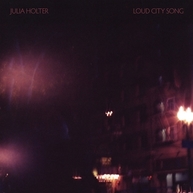
The artist I’m talking about is Julia Holter.  Her music is a really amazing blend of atmospheric field recording (she really has an interest in how things, I mean all kinds of things, sound), modern or post modern composer (she studied composition at CalArts), and catchy pop (she has a knack for a good pop tune).  Really, if you wanted to compare her to anyone, you could say she is a little Laurie Anderson (experimental Brave New World artistry), a little Kate Bush (she has a beautiful voice and can hit a high register of notes, while some songs, especially “Horns Surrounding Me” have a rhythm much like “Running Up That Hill”), maybe a little David Sylvian (not afraid to take music to places that are not immediately accessible to the listener) and even a little like St. Vincent (though I hate to say it as she is much less prideful than Vincent and really much more talented). 
 
When I first head Julia, I was not sure what to think.  I was intrigued by her unique direction; she seemed to play with music like a pottery artist would experiment with clay, and it really was refreshing to hear stuff that I didn’t expect.  My soul felt joy by experiencing art/creativity for the sake of art/creativity.  On first listen, you have no idea where she is going to take you.  Yes, she might have a minute of twinkling symbols, and you start to get weary of the seeming monotony, but if you tune your mind into the possible beauty of a sound for the sake of it being sound, you get that this music is not just about melody, harmony, and rhythm, it’s also about the experience sounds.  But then, seemingly out of the blue, she will hit you with an amazingly beautiful harmony and/or an amazingly beautiful and catchy melody that is nothing if not breathtaking.  At first, you might think it is a little all over the place, and maybe too disjointed, but if you do listen to her records more than once, you will start to realize that there is some really clever organization going on.  This is organized sound, and it is complex and simple all at the same time. 
 
Once you settle into the album and experience its arc, you will begin to see that it is experimental, it is art, but not at the expense of pure entertainment and beauty.  Julia said when she started she tried to write straight, normal pop songs, and was unsuccessful.  So, she ended up throwing the clay back on the table, pressing it into a ball, and experimenting with less standard shapes.  But, out of that, to contradict her self evaluation, came some amazing pop tunes.  She really does have a knack or a good melody, and moments of pop beauty.  On your third or fourth listen, you will hear that the music no longer seems haphazard.  It’s really perfectly balanced. 
 
I believe that the best album she has yet made, out of her 4 releases, is Loud City Songs from 2013.  Though, that said, I do highly recommend Have You In My Wilderness (2015) and Ekstasis (2012).  Where as Ekstasis sounds a little more like she’s still trying to find her footing (yet it’s full of brilliant moments and melodies), and Have You In My Wilderness is a little more standard and streamlined (she’s still experimenting, but she’s getting better and better at those pop tunes), Loud City Songs is a masterpiece of perfectly blended art, pop, classically and modernly inspired composer music, and fields recordings, and sounds for the sake of sounds.  The result of all this blended together is incredibly pleasing, inspiring, beautiful, masterful, and lovely music.  She gives you these sounds to evoke emotions, then she gives you some clashing harmonies that might seem difficult to swallow but are also beautiful in their own way, and then she will bring it together with a very catchy phrase, a perfectly placed harmony, or a lovely melody and the joy circuit in your brain lights up x10.  Like Brian Eno once said, when something clashes, does not fit into your expectation, or seems unconventional, it sounds even better when the composer brings all those sounds back together into a perfect consonant harmony or a conventional yet unique melody. 
 
On Loud City Songs, there are two versions of the same song, “Maxim’s.”  I mention this because it’s a prefect place to see how a song can be presented in completely different ways.  She chooses the arrangements and the presentation of the song so differently for, each version of the song, it almost sounds like completely different song each time. 
 
Julia is one of the greatest musical talents I have heard in the past 10 years.  I just hope I find the time, energy, and open-mindedness to go out there and find more new music to love.  Because, there will always be good new music, but I will need to avoid a static musical brain and keep growing with the changing sounds of the time. 
 
If you want to hear Julia Holter talk about her process of songwriting for the song “Horns Surrounding Me,” check out the dedicated episode on the Pod Cast “Song Exploder.” 

Also, check out the below Youtube links to get an idea of why she is so amazing.


0 Comments

Where do we go from here?

5/7/2016

0 Comments

 
Picture
There are very few times in my life when I have heard something and thought to myself, “That’s it.  That’s what I’ve been waiting for all these years.  That is the apex of music!”  Feeling like I have remembered something new, that I had been waiting to remember, that I had rediscovered what I had been waiting for, did happen when I first heard the band called The Divine Comedy.  (When I head The Divine Comedy it was like I had a puzzle piece missing from my brain all my life, and Neil Hannon’s music came along and fit right in place.  I had been waiting for his music for so many years and didn’t even know it.)  I believe it also happened when I first head the album Rio by Duran Duran.  But, this was a once in roughly every 10 years occurrence for me.  (I probably first head the album Rio in 1991, and I first head The Divine Comedy in 1999, and I first heard Aaron Copland in 1985.)  And none of these examples made me say to myself “this is the apex of music; It does not get better than this.  This is the culmination from ancient times to modern times, and to this day!” 
 
But I did recently have this experience with a body of music.  Not a large body of music, unfortunately; But, a weightier body than most.  And, the discovery was years in the making.
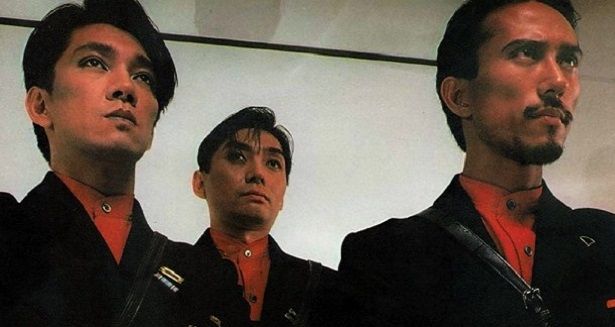
Most of us have heard of Ryuichi Sakamoto.  He might be best known in the USA for wining an Oscar for the soundtrack for The Last Emperor.  I, personally, first knew who he was because he was in the band Yellow Magic Orchestra, and had a couple of their albums when I was in High School.  (They are an extremely important bookmark in the history of music, but I will not go into it in this post.  I will say I first herd of them described as the Kraftwerk of Japan.  But, I now think that this comparison is a misinformed description.  But, hopefully, I can write more about YMO later.)  Sakamoto San has had an extremely prolific career.  He has been much more accomplished and fruitful than most people in the USA know (and he’s still going though he’s in his 60s now).
Picture
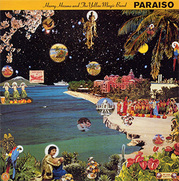
Mr. Sakamoto Ryuichi was classically trained, studied traditional Japanese music, has a background in the new synthesizer technology of the 70s, and was full of talent back when he joined Haruomi Hosono’s short lived Yellow Magic Band to make the gorgeous album Paraiso (I would like to say more about Hosono San, and hope to in the future, as he’s probably one of the best songwriters I have ever heard, and probably one of the most important musicians of the past 50 years, but I hope to get to that later.  Needless to say, there is a very long back story to every component to his work and all the people and creations I mention in this post).  As a contributor to Hosono’s Paraiso, Sakamoto showed amazing talent.  When Hosono had the idea to form an all electronic band (when some electric bass too, but drawing on western stereotypes of the east and a Pacific Ocean feel influenced by exotic albums recorded in the 50s and 60s), he ended up recruiting Sakamoto and Yukihiro Takahashi (who had been part of the successful Sadistic Miki Band) to form Yellow Magic Orchestra.

Fast forward a few years and Yellow Magic Orchestra had become one of the biggest acts in music from Japan.  Sakamoto was poised to hit the music industry with great success.


Picture
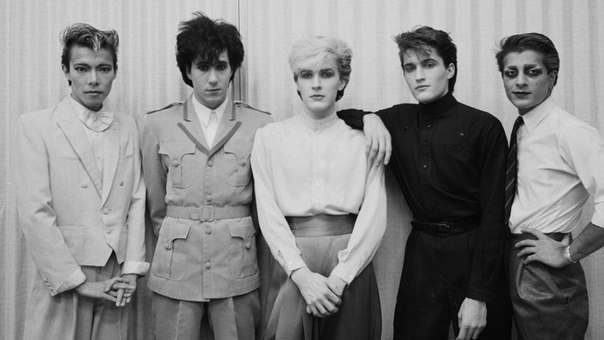
At the same time, in the late 70s, in the United Kingdom, a glam rock band ironically named Japan was listening to Bowie’s Berlin albums and thinking they needed to change their sound.  They briefly teamed up with Giorgio Moroder and recorded the single “Life in Tokyo,” and I believe they also did “European Son.“   Having made these records, they became one of the very first New Wave/New Romantic bands (a label they hated, I am told).  Japan went on to make 3 more albums that are all masterpieces of sound of the time.  (I have mentioned their final album previously on this blog.  I would like to say more about what they did, but hopefully I will get to that in the future.)  Somehow, Japan made New Wave pop that was also some of the most well crafted art of it’s time.  Their last two albums are works of stunning beauty.  They are a combination of kraut-rock influenced Bowie, with funky bass/rhythm (thanks to the late Mick Kern), perfect analogue synth melodies, and finally the brooding, dark British lounge inspired vocals of David Sylvian.
Picture
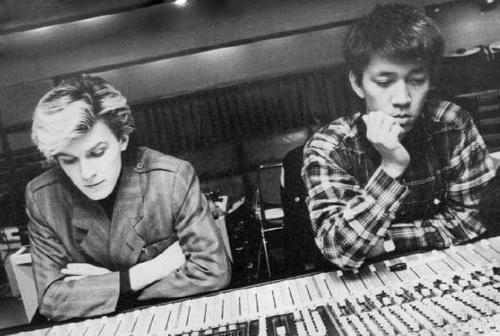
Sakamoto and David Sylvian first worked together when they wrote and produced “Taking Islands in Africa” together for the Japan album Gentlemen Take Polaroids, in about 1980.  I don’t know how they met, or what brought them together.  I would like to elaborate more in the future after having done some research, but, making this song together would be the beginning of many collaborations over the past 35ish years. 
 
By 1981, Japan made their masterpiece Tin Drum, which I have mentioned before as probably one of my favorite, if not my favorite, albums.  It is an amazing fusion of eastern pentatonic scaled melodies, beautiful analogue synth sounds (often percussive), funky bass, unique rhythms, western pop and new wave.  I thought it was about as good as it gets.  I thought, but then, I took one more step.
Picture
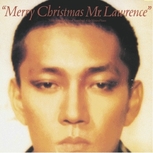
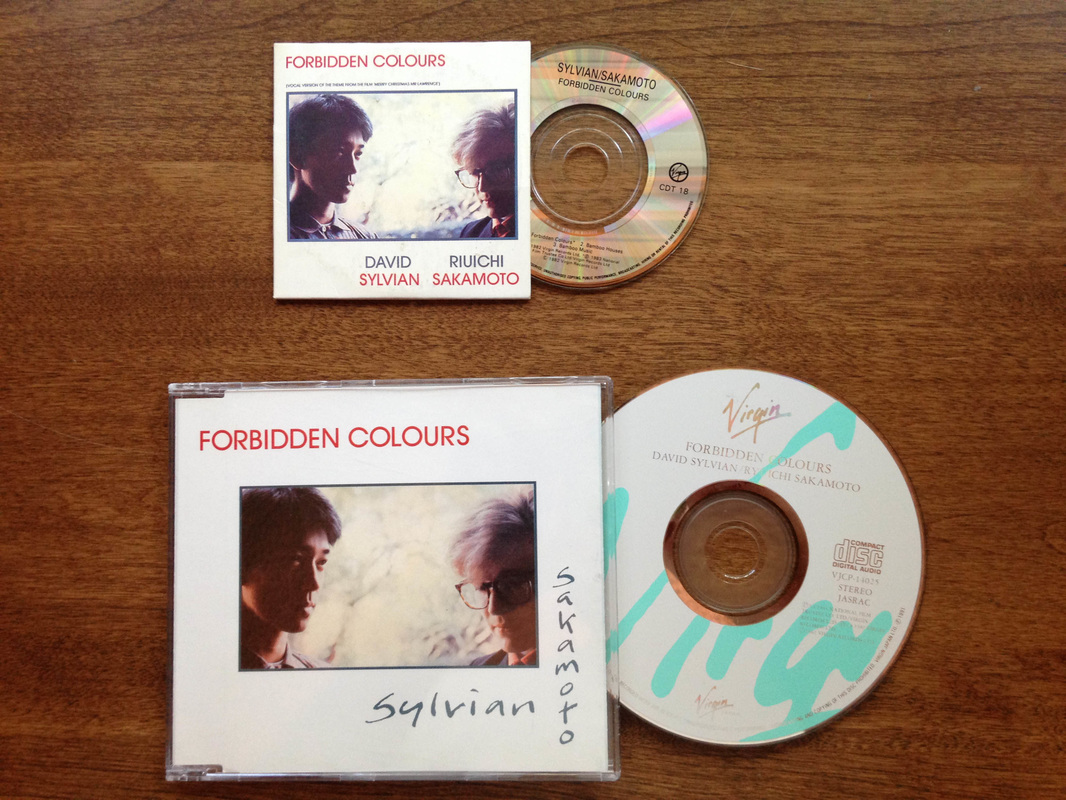
In 1983, Ryuichi Sakamoto, already a star in Japan (the country) was commissioned to write the soundtrack to the film Merry Christmas Mr. Lawrence.  The theme went on to be very well known.  Wanting a single, at the time, that could be internationally successful, Sakamoto teamed up with David Sylvian to take the theme and make it a pop single.  Sylvian wrote lyrics to Sakamoto’s music, and they rerecorded the “song.”  The vocal version of the theme to Merry Christmas Mr. Lawrence, was entitled “Forbidden Colours.” 
 
Sakamoto and Sylvian had previously produced a single together, in 1982, called “Bamboo Music.”  The B-side to this single was “Bamboo Houses.” 
 
I finally went looking for a CD copy of “Frobidden Colours” and stumbled upon a CD single.  The Forbidden Colours CD single is actually a combination of Bamboo Music/Bamboo Houses vinyl single release from 1982 and the single English lyric release of  “Forbidden Colours” from 1983.  I believe when CD technology was young, they put these 3 songs together on this 3inch CD.  A few years later, noticing that no one else was printing 3inch CDs, and many CD players could not actually play them, the 3 song single was again printed as a full size CD.

Picture
I bought a copy of this CD single, and was surprised to find it as a 3inch CD!  I have several thousand CDs (a lot of Vinyl too), but I have never seen a 3 inch music CD.  It did play fine though, but does not fit my car CD player.  Also, it did not include the longer mix/edit of “Forbidden Colours,” which I believe to be superior to the shorter single edit.  So, I found and bought the full sized CD single version of Forbidden Colours.
And here it was, the apex of music, as the disk spins, I think, “it does not get any better than this.  This is the culmination of all music from the beginning of man kind to the present.”  Though there are only 3 songs, “Forbidden Colours,” “Bamboo Houses,” and “Bamboo Music,” this disk may be the best I have ever heard!  Perfect production, amazing songwriting, great vocals, great rhythms, artistic, catchy, experimental, unique, and beautiful.  One could even say this is one step above Tin Drum.  I had that moment were it all came together.  “This is the culmination of all music.  This is the best thing I have ever heard, maybe.”  If, “this the best?”  where do they go from here?  History has played out, and you can look it up.  But, I ask anyone to listen to these three songs, and behold how wonderful music can be; Experience how amazing it can be.  And think, if Sakamoto and Sylvain had made a full 8 to 10 song album instead of only 3 songs, how great that album could have been!  But, no point in speculating; no way of knowing what could have been.  Let us be grateful for the gift that this duo has given us.
0 Comments

A New Star Forms...

2/20/2016

0 Comments

 
For those who might have seen my previous post about the band Lush, it turns out that they have, after 20 years or so, gotten back together and started to make music again.  They seem to know their audience, and have stuck with the Shoegaze/Pop style, which is what they always did best. 

See following link:
http://pitchfork.com/news/62752-lush-announce-blind-spot-ep-share-out-of-control-video/

0 Comments

Seriously?  Too Seriously...

1/24/2016

0 Comments

 
Picture
Picture
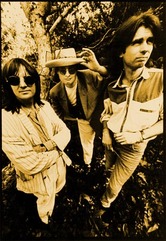
“XTC” who?
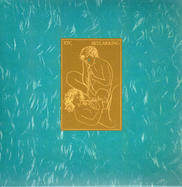
Years ago, I remember picking up a copy of the Dukes of the Stratosphere Chips From the Chocolate Fireball CD from a local record store, and the store clerk, noticing what I was about to buy, became very excited and made me promise to listen to the CD with headphones.  “Ah, The Dukes” he said in excited tones and a big smile on his face.  A few years later, I would notice that XTC (the same band as Dukes of the Stratosphere) would often have their own separate rack or box in other record stores I visited; like the Beatles or The Rolling Stones.  I noticed a few years later when I purchased an original vinyl pressing of Skylarking that the record store clerk, in a different city as the previous mentioned fan, would remark “Wow, original pressing of Skylarking with “Mermaid Smile!”  That’s a great find man.”  It would seem that XTC, has over the years, become a favorite of record store people across the country.
 
So what is with this small yet excited fan base?  XTC seems to be a band that has enjoyed success on the fringes, to those who especially love music, but they have often been ignored or unknown to the masses; with such excitement from a few, but not from most?  One could say that despite their pop genius, incredible musicality, and usually great lyrics, XTC has remained too eccentric for the general public.  They have remained darlings of “College Radio” and record store guys, but unknown to the normal causal music person.  Even some great music fans turn away when they hear XTC; they just can’t swallow it. 
 
But, despite their lack of recognition, they have, for the few who love what they have done, made a lasting impression and life enriching impact.  Why does everyone know David Bowie, who is also eccentric and brilliant and who often also has his own special rack at the record store, but most people have never heard of Andy Partridge (Andy is one of the two chief songwriters for XTC)?
 
Both my wife and my brother say they would like XTC, or rather they would like their music, but they just cannot stomach Andy Partridge’s voice.  My brother goes as far as to keep copies of XTC songs written and sung by Colin Moulding (the other chief songwriter from XTC) on his media player, but not one song written or sung by Andy.  My wife, on the other hand, does not care to hear any of it.  She respects the lyrics, and some of the musicality, but just can’t take his singing.  And she would not know Colin from Adam. 
 
Yes, Andy Partridge has a unique voice, but, his voice is just one part of XTC that makes them just slightly too misfit or maverick for the general public.  (Personally, I love Andy’s voice, and his eccentric style.  He’s got his own kind of soul; he’s not afraid to offend or to venture into extremities.  He’s not afraid to be a bit too emotive at times.  Sometimes he’s very angry, and I can’t help but love it.)  But, there’s more to it than just his voice or style.

Picture
XTC is what?
 XTC is a pop band; they make pop music.  They even have a song called “This is Pop.”  But, sometimes, their songs go places that are almost embarrassing.  I feel a little embarrassed for them when I hear songs like “Melt the Guns,” “Living Through Another Cuba,” or “Pink Thing.”  Really… I mean really!... Andy, are you going to go there?  Do you have no sense of what works and what does not work?  Even I, who probably enjoy XTC more than most fans, just cannot stomach some of the songs they allowed to get on their albums.  But then, there are songs like “Earn Enough for Us,” “The Mayor of Simpleton,” and “The Ballad of Peter Pumpkinhead,” that are as tasteful, catchy, and brilliant as any pop song I have ever heard.  Really… I mean really, Andy,..? Did you really write so many incredible pop songs? 
 
And so, XTC is a band of contradictions.  Most of their songs are very tasteful, well written, musically unique and catchy, lyrically challenging and cleaver, yet some of their songs are annoying, mean, musically unpleasant, lyrically myopic, and pretentious.  They have not been afraid to do what they wanted to do no matter what other people think, or so it seems.  Additionally, XTC simultaneously promotes hedonism and love for one’s neighbor.  They make songs about self indulgence, and at the same time, human rights.  They criticize society like isolationists, but preach cross cultural and multi-ethnic equality and unity.  (As an aside, I don’t know if they had a wealthy background, but they do seem to be highly negatively influenced by the broken, and now less powerful, class system in the UK.  The evil of the class system is a recurrent theme in their music, (see “Complicated Game” or “Respectable Street.”), and they seem to lump the Church in with the rest of the stuffy, prejudiced, and narrow-minded upper-class groups in their native land.  This is speculation, but they may have encountered a broken Church in the UK that put “proper behavior” and “proper etiquette,” above the True Gospel of Christ’s love for the poor and disenfranchised.  Or, they may simply have missed the Gospel message and misunderstood the Church.  Again, there can only be speculation about this.) 
 
A word about Colin, before I proceed:  Colin wrote scientifically fewer recorded songs than Andy.  By my count, he did only 2 to 3 songs per album when most of their albums consisted of 10 to 14 songs.  But, many of the more well known and respected songs are songs he wrote.  He was responsible for great songs like “Making Plans for Nigel,” “Generals and Majors,” and “King for A Day.”  So, fewer is not less. 
 
All of this having been said, there is not much else I can say about XTC, at this point, that has not already been said.  I am not going to talk about their most respected album, Skylarking, though I love it.  (Andy said, about Skylarking, something to the effect that the producer, Todd Rundgrend, “baked summer into a cake.”)  I’m not going to talk anymore about the entertaining, funny, and sometimes silly Dukes of the Stratosphere project (though I would encourage you to look into it.  It’s some of their best material, despite that they blatantly attempts to mimic John Lennon, Syd Barrett, and even Brian Wilson).  I’m not going to talk about what a leap forward Drums and Wires was, though again, I would suggest checking it out.  I’m not going to talk about how Oranges & Lemons was a big disappointment despite having 4 or 5 great songs on it.  However, I believe I would like to shine some light on a lesser respected and more overlooked album by XTC.

Picture
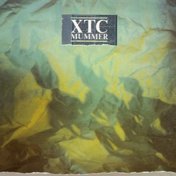
Why listen to Mummer?
Why do I think Mummer gets a bad rap?  Why do I think it’s actually one of XTC’s stronger albums?  Mummer comes on the heels of Andy’s Partridge’s famous nervous breakdown.  Before, the band had had a strict touring schedule, which proved to be too much for Andy by the end of 1982.  They had, before this album, written songs that would be on records but also would be played live.  After Andy’s breakdown, the band decided to keep making music, but to never tour or play a live show again.  The result was (much like the result when the Beatles decided to stop touring and send the record, Sgt. Pepper’s Lonely Heart’s Club Band, on tour in their stead) XTC was now free to solely focus on trying to make great albums.  The first of these is Mummer. 
 
If Skylarking is “Summer baked into a cake,” Mummer is Spring etched into vinyl.  It was their most pastoral and agrarian album to date.  I first got into the record when I was driving through the Shenandoah Valley in late spring or early summer partially in the rain.  The effect of the album together with the seasonal and weather sensations was very powerful.  You can fell the earth on this album.  You can see the crops, the trees, the green fields, the wind in the trees, the people living off the land, the violence, the struggle, the freshly picked food on the table, and the wet biosphere of springtime. 
 
I mention violence and struggle as the album also brings to mind historical social structures of the anglio-saxon, middle ages, enlightenment and 20th century periods of Britton.  While “Love on A Farmboy’s Wages” tells a sweet and sad story of the hardship of farm laborers who don’t own the land they work, “Deliver Us From the Elements” reminds us of our dependency on the yield of the Earth that can often feel fickle and disheartening.  The former song mentioned has an acoustic traditional musical sound, while the latter has an amazingly appropriate synth drowning rhythm with crashes of thunder and howling wind.  “Deliver” brings to mind the plight of the peasantry in a primeval time.  “Great Fire” also has a natural influence in word and sound, though, lyrically it is metaphorical and actually about a relationship. 
 
But, as historical, natural, and agricultural themes go, the most powerful song on the album is “Human Alchemy.”  This song might contain some of XTC’s most moving and striking lyrics.  It’s one of many of their songs, pined by Andy, that point to a Christian prospective though Andy is a self professed atheist.  (see also, “Knuckle Down,” “Balled of Peter Pumpkinhead,” “Reign of Blows,” and “Wrapped in Grey.”)  “Human Alchemy” is about slavery.  It’s about the horror that some people actually enslaved other people for profit.  As the song says, “we turned skins of black into skins of brightest Gold,” or they dehumanized, subjugated, and mistreated people who looked different from them to make money.  But, as the song goes on to say, there is a great toll on the human soul when one does such great evil to a fellow human; “Although we held the whip, you know we where the real slaves.”  And so, XTC is willing to come right out with it, to go as far as to say, when you do such evil, you become the one who is in bondage.  God have mercy on those who mistreat God’s people while the master is away.  Watch out, because He is coming back at a time you don’t expect!

Picture
Mummer continues: 
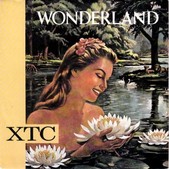
 One of my brother’s favorite XTC songs is “Wonderland.”  This song, pined by Colin Moulding, displays early example of a clever and perfect use of the analogue synthesizer to convey a lush, intricate, beautiful, and fantastical setting.  Though “Wonderland” is a clever metaphor for frustration in a relationship, it is also very catchy, smooth, effortless, and beautiful.  It continues the pastoral and British themes of Mummer. 
 
“Beating of Hearts” is, again, a song about choosing Love over violence.  It’s not the best Andy Partrage song on the subject, but it’s still a powerful anthem.  Remember that Love is more powerful than evil.  Remember that the Light will overcome the Darkness.  Musically, it, like some other songs on the record, has a somewhat traditional sound, almost Indian sounding at times, and the rhythm is almost African or Japanese in style.  It’s not pulled off as well as it could be, but it’s not bad. 
 
With “Ladybird,” one can see the spring sun shining in the window and the green meadows of England.  Though it’s a love song, again like many of Andy’s songs somewhat metaphorical, it’s musically an attempt to incorporate jazz with the consistent pastoral setting.  While with “In Loving Memory of a Name,” Colin conjures images of small villages in the UK with medieval churches, with “Me and The Wind” XTC successfully pulls off another elemental sounding recording, again with metaphors about a relationship, but in 3 beats per measure and without sounding at all like a waltz.  “Me and The Wind” is musically possibly one of XTC’s stronger, more pleasant, and more interesting songs. 
 
Lastly, “Funk Pop a Roll” is a straight rock song criticizing the quality of radio songs.  As Andy says about pop music, “Swallowing is easy when it has not taste.”  And so, we end with XTC’s clam that pop music is shallow, weak, and meaningless, yet they are doing so with a short catchy rock-pop song.  Maybe they never meant to make pop music after all.  Maybe, though they claim in another song “This is Pop,” they intended to do something else?  If so, how do you account for all the Pop hooks, catchy melodies, concise songs, verse/chorus structures?  Maybe they are what they criticize.  In the same way they criticize those who would make music to make money, making the music weak and “tasteless,” they made money making catchy songs, though not all tasteless, some taste like rubbish.  Though they would criticize the social structure and the mistreatment of the poor, they are a part of this same social structure.  Though they are on the fringes, they are still on the inside.  And, as with all of us, they strive for something better, they long for a better world, but they are not only a part of the broken world, they are active participants, like all of us.  The Apostle Paul says, “If anyone thinks they are something when they are not, they deceive themselves.  Let us not grow weary in doing good.  Carry each other’s burdens, and in this way you will fulfill the law of Christ.”

Video for "Wonderland"


Video for "Human Alchemy"

0 Comments

Two Artist are Better Than One?

8/30/2015

0 Comments

 
Picture
Picture
In this day as I grow older, I wonder if, and/or why, my appetite for music does not diminish, but my strength to search for new music does; I wonder why I continue to invest what little time I have into music of the past without locating much new music, from the near present, that I love.  Has my procrastination overcome my love of the discovery of beautiful or pleasurable organized sound?  But, yet, sometimes I still find the time and energy to plod into new territories, even if for only an hour or two on weekends, and I hope this time will eventually lead me to new, life enriching discoveries. 

Yet, there are still artist of previous days, making the art of sound, even in our day, that are very much enjoyable.

Many of my favorite bands/musical acts happen to be duos.  There is something about two people, for the past some odd 30 years or so, that lends to pop greatness.  Maybe more focused and discerning than a solo artist who often does not have enough collected, healthy criticism to keep them from blundering into self-indulgent, ineffectual, or overly multi-styled experiments.  Where as full bands may sometimes lend themselves to monochromatic compositions due to a frequent inability to agree.  Maybe two people are also more likely to experiment in areas that the one, by themselves, are too fearful to traverse?  This would be the case of The Duckworth Lewis Method.    

All this being speculation, there is still something to the power of a duo to produce well balanced, artistic, creative, brilliant pop music.  This is true for, as examples, Pet Shop Boys (Tennet and Lowe), Erasure (Clark and Bell), and Goldfrapp (Gregory and Goldfrapp). 

One of the most recent additions to my favorite duos list, recent being within the past 10 years, is The Bird and The Bee (George and Kurstin).  They started their career around about 2005 or 2006, and my mind was blown when I first heard them on a local college radio station in 2007.  Their first album, also entitled The Bird and the Bee, quickly became one of my favorite recordings.  It is a beautiful work of art, and, along with their other records, highly recommended. 

The Bird and The Bee, unlike the other duos mentioned above, are actually American; they come from Southern Californian.  Like the other duos mentioned above, both members share songwriting duties, but one leans into the role of music tech and instrumental expert, while the other more so takes on the role of the voice and image.  Sometimes the latter brings a bit of humanity, flamboyance, and soul to the mix. 

So, I was extremely happy, a couple of months ago, when I heard that The Bird and The Bee were FINALLY going to release a new album!  It was to be the first record they had done in 5 years.  The new album, Recreational Love, has been out and available for about 2 months now.  It can be a bit difficult to compare it to their previous music.  They are still the same band, in many ways, but also, of course, there is some change from their previous work.  All bands/musicians change over time.  It is one of the characteristics of artist.  Given that The Bird and The Bee were approaching their 10th year of existence, when many often go astray from their former glory, the jury was out as to if they could still make good music. 

For the new album, they have left behind some of their earlier Jazz/pop influence.  Their songs are a little less Burt Bacharach, and a little more like Heatwave, The Tom Tom Club, or even Hall & Oates.  More concise, more dance oriented, and more soulful, they have shifted their sound and style just enough to keep things fresh, but not so much as to alienate fans like me.  I hear a bit of neo-soul and neo-pop in some of the songs (remember that Kurstin has, on the side, or as his day job, been a successful producer for Sia, Foster the People, Pink, Lykee Li, and Lily Allen.)  The title song, “Recreational Love,” probably could get some radio play on R&B radio.

The new album finds Inara George pushing her voice to new levels, and still sounding as good as ever.  She does some vocal styling sometimes similar Michael Jackson, but she is still herself and sounds like only she could sound.  The lyrics on the album are a bit simpler than on previous albums.  Some choruses are repetitive and general, much like some of Phil Collins’ biggest hits.  Think, “Tonight, Tonight, Tonight,” or “Take Me Home,” but instead insert “Los Angeles” (and there is even a song on the new album called “Please Take me Home.”)  There are no songs as lyrically thoughtful as older The Bird and The Bee songs like “Man” or “What’s in the Middle.”  But, the songs are still very pleasurable even if they do not have quite as much to say. 

What we have with Recreational Love is shameless, respectable pop.  It’s a neo-pop mixed with 80s dance styles and 80s funk rhythms.  There are some good synth tones, good dance rhythms, and well crafted songs.  One could say they left behind some of their former beauty, with some exceptions like “Lovey Dovey,” but these songs are just so entertaining and fun that I don’t really mind. 

I highly recommend Recreational Love if you like pop music.  The important thing is that this duo is still one of the more talented songwriting teams of our day.  Their music infuses one’s soul with great beauty and joy. 

"Recreational Love"

"Jenny."
0 Comments

May 24th, 2015

5/24/2015

0 Comments

 
Picture
It could be said that very few albums/records are perfect.  There are thousands of good albums, and compositions; many great works spanning decades.  But, “perfect” is something one could rarely apply to any of them.  Usually, there will be a weak part here or there.  Maybe, sometimes, one of the songs will not be quite up to the standard of the rest.  Even Genesis, one of my favorite bands, who successfully crafted ambitious works, often in the style of prog-rock, do not have an album I would consider perfect.  The guitarist from Genesis famously said that he thinks they, the band, are lucky not to have a “definitive” record.  And bands like Queen come close with a work such as A Night at the Opera, but there’s still a weak bit here and there.  It’s a great record but not “perfect.”

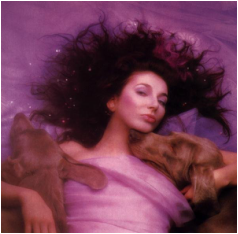
If Pink Floyd’s Dark Side of the Moon could be considered one of the few “perfect” albums of the 70s, with every piece and part put together in such a manner to create the balanced cohesiveness without blemish or weakness for any second of the album, I would say that Kate Bush’s Hounds of Love could be considered one of the few perfect albums of the 80s.  Like Dark Side, it’s perfectly crafted for maximum effect, meaning, musically cohesive and brilliant.  Not to mention, it is an amazing work of art.  Not one second should or could be changed, added, or taken away, to make it any better than it is.

Hounds is Kate’s 5th album.  I believe it took her at least a year or more to create and perfect it.  She had been very successful early in her career, and though the album preceding Hounds, The Dreaming, is an amazing work in its self, (as well as a good indicator of what was to come next) she had dipped a little in the consciousness of the musical public.  People did not know if Kate would still remain a major artist.  Then, in 1985, she dropped the bombshell that was The Hounds of Love, and she was, if not already, immortalized as a major artist.  She was always very good, but this album took everything to a new level. 

Like Dark Side, Hounds is divided into two halves (as all albums in those days had to be), but unlike Dark Side, which plays like one continuous song from start to finish (both sides included), each side of Hounds is distinctly different.  Side one, Hounds of Love, is a collection of individual songs.  Though many might say it’s Kate’s way of working together unrelated ideas as well as give the record company the possibility of some “hits,” a closer listen will reveal that each individual song flows together perfectly, and each are an amazing work in of themselves.  The 2nd side, The Ninth Wave, is where the album is elevated to the status of greatness.  This is not simply a collection of songs but one cohesive vision, and it plays (listener take note) seamlessly from start to finish like one long song.

Picture
Side A:  Hounds of Love
Kate had been experimenting with the Fairlight for many years, and began with Hounds to write some songs, in a similar way to Peter Gabriel’s Security, around rhythms and loops.  This was cutting edge at the time.  Brian Eno and others of his time created music similar to this in the 70s.  Talkingheads had a couple amazing records in the early 80s, aided by Eno, where rhythm and atmosphere took the front seat, but they mostly still used analogue instruments.  Kate and Gabriel, among others, in the early 80s, with the aid of technology, started actually programming and sampling.  The result for Hounds is a completely new sound for Kate.  If I were a songwriter, and I am not, I would feel limited by repeating a single rhythm or loop throughout a song.  But for those like Kate Bush, who are extremely talented songwriters, it provided a new creative tool.  Every beat, every synth sound, every instrument on Hounds is carefully crafted for a completely unique sound and atmosphere. 

Picture
The album starts off with Running up That Hill, or as Kate would rather call it, A Deal With God.  It fades in with a chord that persists in the background for the duration of the song.  Soon to follow are the drums and rhythm section.  Then, the very unique, perfectly placed, subtle, and beautiful synth melody picks up.  The song seems limited on first listen, but somehow it gets stuck in your head.  It’s very original.  No other song sounds anything like it.  It’s a song about the difficulty of communication between men and women and the resulting disconnect.  It is frequently a source of conflict in life, and Kate perfectly explains this constant misunderstanding between the sexes.  She acknowledges that there’s no way to really understand the other’s point of view unless you could actually become that person for a while.  This is not just true of men and women, but it often rings true for all people.  We are put on the earth as individuals with different experiences and ways of thinking.  As empathetic as one might be, as much as one might try to understand the point of view of another, it’s impossible to really know the experience without becoming the other person.  We can say not to judge someone else unless we walk around in their shoes, but, as Kate explains, it goes far deeper.  We would have to walk around in one’s body and mind.  Kate says if only God would allow us to switch places, then we would not have this conflict created by misunderstanding.  Her insight is strikingly accurate and personal.  Though she mourns a difficult, universal experience, she does not offer a real life solution.  I believe God can still build bridges between people without us having to change places.  Despite conflict and misunderstanding, we can forgive and accept individuals.  Running Up That Hill became an international hit for Kate.  It is, if nothing else, a beautiful song.

Picture
The second song on side one is Hounds of Love.  I believe I heard Kate was watching a TV program where a young girl was being chased by dogs, as a fox is chased during a traditional fox hunt.  Kate took the idea and applied it to the fear of love, attachment, and commitment.  The Hounds are a symbol of the love that is chasing her through the woods.  She is afraid, so she runs.  But, unlike a fox hunt, if she is caught, the result is positive.

Song three is The Big Sky.  Like the previous two songs, it’s written around a rhythm and a consistent sonic coloring.  It is an enjoyable song, almost sounding as big as the sky she is trying to describe.

In the 4th song, Mother Stands for Comfort, Kate confronts the “unconditional love” and rose-colored lens a mother has for her children.  Even if the son is a murderer, the son’s mother will see the best in him and sometimes even hide him or try to protect him.  Here we are forced to think of the negative aspects of this unconditional love of motherhood.  Usually a good thing, sometimes it can be bad for the child and the child’s victim.  If she really loved her son, would she not turn him in to protect him from himself?  Musically, this song, though it flows perfectly with the rest on side one, gives the listener a break from the more upbeat rhythms of the first 3 songs.  There is still a repetitive drum line, but here the lovely bass comes to the forefront.  The synth sounds are, again, completely unique to Kate and the album.  But, there is also Kate’s beautiful Piano.  The song has dark tones and little sounds of crashing and breaking, perfectly conveying the meaning of the song.

Picture
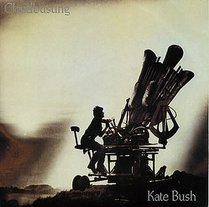
The last song on side one of Hounds, is Cloudbusting.  This song is based on a book I have not read.  The story is told from the point of view of a child whose father created a machine that can change the weather.  Because of the power of this machine, the government takes away the child’s father and his technology.  The child is mourning the loss of his/her father.  Musically, the song has a rhythm similar to a train, which is not unique to music.  But, the way Kate does it is completely unique.  Choppy strings provide melody and rhythm, with a marching band esque snare drum.  The song even ends with the sound of a steam train.  


Picture
Side B: The Ninth Wave
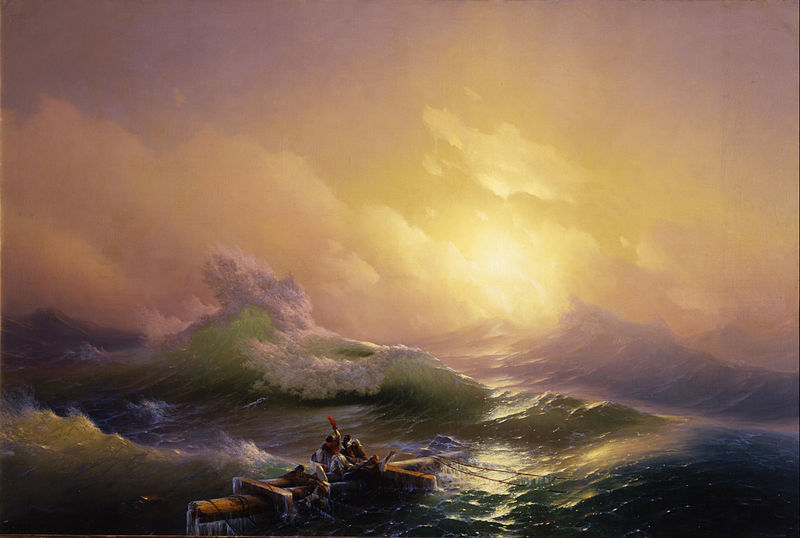
Dark Side of The Moon had an overarching theme of the pointlessness of life, that life is fleeting, the resulting hedonism, and there may be no reason to draw a distinction between sanity and madness.  Dark Side is existential in the way pop culture uses the word “existential,” while The Ninth Wave, the second half of Hounds of Love, is about death, the temporal nature of life, but not about pointlessness.  I would argue The Ninth Wave more deeply explores the reality of our lives.  Life is short and fleeting, and “in the midst of life we are in death.”  The Ninth Wave is tied together with a theme of death.  Death, in this musical work, is symbolized by water. This is not a new concept, but a powerful illustration: Baptism also uses water as a symbol of death.  Not only does Kate weave death and water together, but she inserts the fragility of life; that life is partially a waiting for death.  In life, we are sleeping or waiting to die.  And death comes with certainty but often when we do not expect.  And, in the end of The Ninth Wave, as with life, we are surprised to find that death is not the end.  There is a Morning Fog of rebirth and resurrection.  It emerges from the darkness like one switching on the lights in a dark room. 
The Ninth Wave starts out with And Dream of Sheep.  It is the exposition of the story arch of this piece of music.  A shipwreck has happened in the night on the high seas, and a survivor has gone overboard with only a life vest and a “little light” beacon on his chest flashing at regular intervals.  He is adrift by himself in the vast ocean waiting to die.  He is holding on to some hope that there will be rescue, but having a hard time not going to sleep, or letting go of life.  The entire records can be interpreted as this man’s dream as he floats in a half sleep in the dark ocean.  He and we, as we experience the album, are constantly in a state of being half awake or half asleep while floating though life:  Holding on and letting go.  The main instrument driving the song is a piano.  Kate is in the prime of her vocal abilities and the beauty of the song along with its meaning is almost overwhelming.  With this song, as persist throughout The Ninth Wave, Kate uses samples and sounds that reoccur throughout the album.  Every time I listen to this record I hear something I’ve never noticed before.
Picture
And Dream of Sheep leads seamlessly into Under Ice.  Here, someone is skating on a frozen river to music that mimics a cold atmosphere of snow and ice.  You can almost hear the skates as the protagonist moves over the frozen water.  Like in life, as we hove just above death not thinking of the danger that lies beneath us, in an instant there are cracks, and the floor literally falls out beneath us.  Into the ice-water, into death, we fall.

Picture
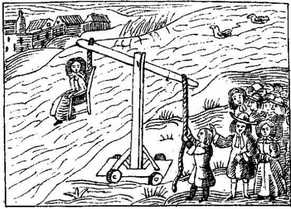
Seamlessly, The Ninth Wave passes into Waking the Witch.  The rising action has begun.  Here we hover between waking and sleeping.  The dream continues as voices of those we know and love tell us to “wake up,” but we can not seem to open our eyes.  There is a piano with delay, persistent samples, singing humpback whales, chanting saints, and a feeling like we are under water.  Then, the song quickly switches on a dime.  Kate’s voice skips in digital flutters as she struggles to wake.  Right away, we are in the midst of a grate evil some women have historically experienced.  Many years ago, when a woman was thought to be a witch, sometimes people would force her underwater to see if she would drown or survive.  As Kate puts it, “The red roses go down.”  And drown they do.  Into death they pass because of the evil of fear.  I believe St. Teresa of Avila once said, “I am not afraid of the devil, but I am afraid of people who are afraid of the devil.”  Those who misunderstood God, and the love of Christ, judged their fellow sisters, and became the perpetrators of the evil they were trying to prevent.  The judge, in the song, speaks loudly with anger, and the victim prays for mercy and help.  There are church bells, signifying the great need for mercy, and the evil for which the church is capable.  But, the judgment of men is luckily not the last judgment.  God save us from misusing the name of Christ.  When we stand before him one day, we will tremble.

Waking the Witch ends with the sound of a helicopter flying overhead, and a man in the helicopter with a megaphone calling “get out of the water.”  This leads us directly into Watching you without Me.  In this song, there is a syncopated rhythm with a catchy and beautiful synth line.  The bridge of the song, where Kate sings something in reveres, sounding somewhat like music from India, is one of my favorite moments on the album.  I always turn up the volume.  In the song, Kate talks about how death is actually unnatural, or feels unnatural.  How can a loved one be in the same room with you one moment, and then be gone from life the next moment?  This feels very unnatural.  We can no longer hold onto a moment than we can hold onto life.  Someone is here one day, and gone the next.  It does not make since.  It causes grief.

Next, the listener is lead directly into “Jig of Life.”  This song has elements of traditional British Isles jig music with a fiddle.  But, instead of sounding happy like many traditionally jigs, this one is very angry.  There is no screaming; this is not heavy metal.  It is successfully emotionally angry without being overly bombastic.  It is about the sorrow and grief that is the loss of life.  When we die, will we be forgotten?  Kate is angry at death for taking away each moment which we can never get back.  She talks about holding onto moments like they are objects, but she can never do that.  We have no power over death.  We are nearing the climax of the story arch of The Ninth Wave.  The plot thickens with a piece of poetry at the end of the song.  We are born, we live, death calls to us, written on our palm is our time span, and soon “the life spray cools.”  Moments come and go like ocean waves.  In this waking life we can not better hold onto a moment than we can a wave in the sea.  And, like the passing of water, so the time of our life passes.
Picture
This brings us to Hello Earth.  Kate expands her concern of death of individuals to the death of the entire earth.  How temporary is the world in which we live, and how small and fragile is the Earth.  If you once walked on the moon, or if you ever left the orbit of the earth, you would perceive the whole world smaller than your own hand.  And while we are on this small fragile world, we, like the singing monks in this song, call out to the Lord for mercy.  We pray for deliverance from the waves and water.  The monks cry out for mercy and help.  I would be lying if I did not confess that the crying of these monks, like that of all humanity and creation, brings tears to my eyes.  They say we need you Lord.  We are powerless over death.  Christ was “there at the birth, out of the cloudburst, ahead of the tempest.”  The monks sing out for salvation.  And under the waves goes Christ.  He goes into death on our behalf.  We have reached the climax of The Ninth Wave.  “Go to sleep little earth.”

Picture
Many would have ended the album here, but Kate takes the story through to resolution.  The last song is The Morning Fog, and there is resurrection.  “Little life begins to breathe again… being born again.”  And “I love you better now.”  Christ died and rose out of the water of death so that we and the whole earth might also rise from death to eternal life.  Musically the song is peaceful, hopeful, and it sounds like a new day.  And Kate ends by telling her family and friends that she loves them.  In the end, there will be Love.  The last note implies that there is more to come after this new beginning.  We have only just begun.

0 Comments

Light from a Dead Star

5/17/2015

0 Comments

 
Picture
Picture
How could I have forgotten?  Why had it been so long since I got out my old CDs from my dreaded High School days?  I remembered the 90s as being a pretty weak time for pop music.  I had forgotten that there was actually some really good music.  It was not all Letters to Cleo or Live and the blah blah of modern rock radio.  There was Massive Attack, Morcheeba, Stereolab, Komeda, The Magnetic Fields, The Divine Comedy, Erasure, and many other brilliant acts who wrote great songs, created new sounds and styles, and pushed the envelope of music in new directions.  There was a loung/exiotica revival which made Henri Mancini and Burt Bacharach cool again.  Along similar lines, many artists did updated electronic versions of 60s-esque syncopated jazz.  Some of that stuff was fantastic!  Additionally, back in those days, I was a big fan of the not so creatively titled genre “Brit-pop” or “Brit-Rock.”  Blur, Oasis, and Suede were among my favorite bands.  Did I like that stuff just because they were British?  Were they just enough like Americans for me to feel a connection to the music, but just different enough for the music to feel a bit exotic or romantic.

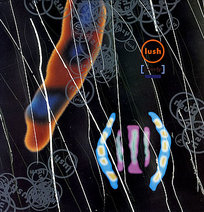
Recently, my brother sent me a link to an article and interview with two members of the 90s shoegaze band called Lush.  It’s not the most interesting article, but I was reminded that Lush was my favorite band from that period.  I had not listened to them in quite a while, and I could not believe I had put them on the back burner.  When I was a teenager, their music hit me like an emotional ton of bricks!  It blew my mind!  I was so extreme.  Listening to their music, at least everything they made before 1995, was a transient experience for me.  I didn’t know anything could be so beautiful, catchy, lonely, charming, textured, and other worldly. 

Lush made music from roughly 1989 – 1996.  As I learned a few years after I discovered them, they were part of a genre called “shoegaze” or “shoegazing.”  This included other band, I would also later discover, like Ride, Chapterhouse, Pale Saints, Slowdive, and My Bloody Valentine.   The idea was to get a couple guitars (or more), a drum kit, a bass, and light indistinguishable vocals, put heavy effects on the guitars so that they sound as “lush” or, as others have pointed out, swirly as possible, sometimes using dance rhythms or almost minimalist, repetitive rhythms, and airy vocals mixed low so that they do not stand out in front of the rest of the music.  It gives the music an ethereal/other worldly sound.  It’s rock music, but it’s carefully crafted to be sonically pleasing and distinct.  Many have imitated this sound since the golden age of shoegaze in the early 90s.

Several friends of mine have told me the shoegaze sound gives them the feeling of autumn.  I personally often associate it with early summer.  Either way, it points to the beauty of the natural world.  It enhances our experience of wonder and beauty. 

To me, listening to Lush again, they stand out from all the rest of the shoegaze bands in that they wrote pop songs.  Under the extreme guitar effects and muted vocals, there was some really good pop songwriting.  They wrote great melodies and hooks.  They had good bass lines and harmonies, interesting chords and melodies, and carefully crafted song structure.  When you get to the bones of their music, it’s still good pop.  It makes since that they actually scored some radio hits back in those days.  All the shoegaze bands I mentioned are very good, (and I suggest checking them out if you get a chance), but for me Lush still breaks my heart a little with the incredible beauty of their music and songs.  I am filed with delight.    

Picture
In the article/interview my brother sent me, the two chief songwriters Miki and Emma, talk about having, in the present, moved onto more normal lives of 9-5 jobs and having children and families.  I’m very glad they have been able to get on with their lives and have families, and I hope they are joyful, peaceful, and feel blessed.  But, it does make me sad, for our sake, that they do not write songs anymore. 

I would say I am especially sad that Emma, who seems to have had a natural knack for writing great songs, does not still write songs.  The world is greatly enriched with each new good song that is created.  It is like a new little world is added to the whole bigger world.  I know her craft and unique style has enriched my life.  No one else writes exactly like she does.  I wish the music industry could still support such talent. 

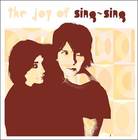
Emma proved that she did not just shine via the vehicle of Lush when she was also part of a songwriting team in a band called Sing-Sing.  Their first of two albums released in the 00s, The Joy of Sing-Sing, is a perfect package of lovely pop tunes.  My favorites on the record, Far Away From Love, Panda Eyes, and You Don’t Know, written by Emma, are as good as most any pop songs I have heard.  With “joy” I “sing” them over and over in my head. 

I feel a sadness that all this time has already gone by.  It has come and gone so fast.  I cannot believe it’s been at least 20 years since I first heard Lush, and fell in love with their music.  In many ways I was a different person back in those days, but I have discovered that I still love their music.  They don’t knock me over into transcendental ecstasy like they used to, but they are still lovely songs.  And now, I feel a bit of beautiful sadness as their songs remind me of the longing in my heart; that familiar longing to be in timeless beauty to which their music only alludes.  Yet it also reminds me of a time of life that is, for better and worse, gone forever. 

Another Lush song.

And a song by Sing-Sing.  Thanks for the great tunes Emma!

0 Comments
<<Previous

    Author

    This blog is authored by DJ Serious.  He is way too serious and needs to lighten up!  Thanks for visiting!

    Archives

    September 2017
    July 2017
    April 2017
    August 2016
    May 2016
    February 2016
    January 2016
    August 2015
    May 2015

    RSS Feed

Powered by Create your own unique website with customizable templates.